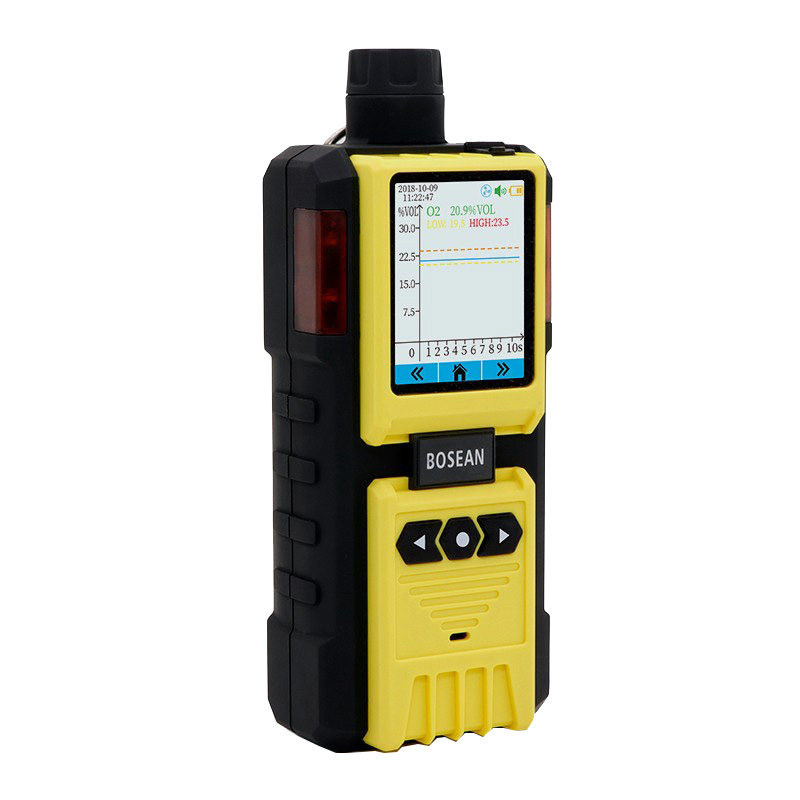
Combustion and flue gas testing help industrial operators evaluate burner performance, identify incomplete combustion, and monitor emissions. Selecting suitable equipment requires attention to target gases, measurement ranges, sampling systems, response time, and operating conditions. A portable gas detector can support workplace safety, while a portable gas analyzer is generally selected for more detailed combustion measurements. Understanding these different functions helps businesses choose equipment that matches their inspection and process-control requirements.
- Why Combustion and Flue Gas Analysis Matter
Industrial boilers, furnaces, kilns, and heating systems depend on controlled combustion to operate efficiently. When the air-to-fuel ratio is incorrect, combustion may become incomplete, increasing fuel consumption and potentially producing hazardous gases such as carbon monoxide. Excessive air supply can also reduce thermal efficiency by carrying additional heat away through the exhaust.
Flue gas analysis provides information about combustion conditions. Oxygen measurements help operators assess excess air, while carbon monoxide readings can indicate incomplete combustion. Depending on the application, measurements of carbon dioxide, nitrogen oxides, and sulfur dioxide may also support emissions assessment and equipment optimization.
Regular testing is therefore valuable for industrial facilities seeking to improve energy performance, investigate burner problems, and maintain environmental compliance. The required measurements depend on the fuel, combustion equipment, operating conditions, and applicable regulations.
- Key Parameters to Consider When Selecting Equipment
The first consideration is the gas composition that needs to be measured. Different combustion applications require different sensor combinations. A boiler inspection may prioritize oxygen and carbon monoxide, while certain industrial processes also require monitoring of nitrogen oxides or sulfur dioxide.
Measurement range and accuracy should match expected operating conditions. Equipment with an unsuitable range may provide insufficient information when concentrations exceed its measurement capacity. Buyers should also examine resolution, response time, calibration requirements, and sensor replacement intervals.
Temperature and pressure conditions are equally important. Flue gas can be hot, humid, and contaminated with particulate matter. Sampling probes, filters, tubing, and condensate management components must be appropriate for the sampling environment. A suitable portable gas analyzer should maintain reliable measurements under the conditions specified by its manufacturer.
Another consideration is portability. Technicians may need to move between multiple boilers, exhaust outlets, and production areas. Instrument weight, battery capacity, display readability, control layout, and data storage can influence inspection efficiency.
- Sampling Systems and Their Importance
Sampling design directly affects measurement reliability. Some instruments use diffusion to monitor surrounding air, while others employ built-in pumps to draw gas through sampling lines. Pump-based designs are particularly useful when the measurement point is separated from the operator or located inside an exhaust duct.
However, combustion sampling requires additional attention. Probe placement, gas leakage, condensation, and particulate accumulation can influence readings. Sampling lines should be suitable for the temperature and chemical characteristics of the gas, and filters should be maintained according to manufacturer recommendations.
Before purchasing a portable gas analyzer, industrial buyers should determine whether the instrument includes the necessary probe, tubing, filters, and sampling accessories. They should also confirm whether the equipment supports the required gas channels and measurement ranges.
- BoseanK-600: A Pump-Based Multi-Gas Detection Option
The Bosean K-600 is a five-in-one multi-gas detector designed with a built-in sampling pump. Its integrated circuit architecture combines intelligent instrument control with proprietary digital-analog hybrid communication technology. This design supports portable gas detection applications where controlled sampling is required.
The instrument uses high-strength engineering plastics and compound non-slip rubber for its housing. Its construction is designed to provide waterproof, dustproof, and explosion-proof protection, making the device relevant to demanding industrial environments where equipment durability is an important consideration.
For inspection teams, the built-in pump is a practical feature because it allows gas samples to be drawn through a sampling line rather than relying exclusively on natural diffusion. This can support measurements at selected locations while helping operators maintain a suitable distance from potentially hazardous atmospheres.
Nevertheless, buyers should distinguish multi-gas safety monitoring from combustion performance analysis. The supplied K-600 product information does not identify its five installed gas sensors, individual measurement ranges, or flue gas measurement capabilities. Organizations should confirm the exact configuration before specifying it for boiler tuning or emissions testing.
- Matching Instrument Functions to Industrial Applications
A portable gas detector is primarily selected for identifying hazardous atmospheres and warning workers when gas concentrations reach preset alarm levels. Typical applications include maintenance inspections, confined-space assessments, equipment servicing, and routine workplace safety checks.
Combustion analysis has a different objective. Technicians need measurements that help evaluate fuel efficiency, excess air, and combustion quality. Therefore, procurement teams should establish whether they need personal safety monitoring, process analysis, or both. A single instrument should not be assumed to perform every function.
A portable gas analyzer intended for flue work should be evaluated for its sensor configuration, sampling probe compatibility, temperature measurement options, and data recording functions. Buyers should also examine calibration services, consumable availability, technical support, and the manufacturer’s documentation.
Making the Right Investment for Combustion Monitoring
Selecting suitable gas measurement equipment requires a clear understanding of the application. Combustion technicians should prioritize measurement accuracy, sampling reliability, and the parameters needed for process optimization. Safety managers should separately consider alarm performance and protection against workplace gas exposure.
Bosean develops and supplies gas detection and measurement instruments and provides technical services for customers. Its K-600 offers a pump-based, five-in-one design for industrial gas detection applications. Before purchasing, businesses should verify the installed sensors and specifications against their actual requirements. Working with an experienced supplier and maintaining a consistent calibration program can help industrial facilities establish more dependable monitoring practices.
