Modern dental laboratories face constant operational pressure to balance production efficiency, restoration precision, and strict cost control. As digital dentistry continues to mature across global markets, many laboratory managers and senior technicians evaluate whether transitioning from outsourced production to in-house additive manufacturing can significantly improve workflow stability.
A common question raised by procurement decision-makers during facility upgrades is: How does integrating metal additive manufacturing directly impact daily turnaround times and long-term operating costs for complex dental frameworks? Bringing metal production in-house offers distinct structural advantages, allowing facilities to maintain tighter control over delivery schedules while meeting rigorous clinical demands.
Riton provides metal 3D printing equipment, digital production tools, and technical support for dental laboratories. Backed by nearly 30 years of laser expertise and early pioneering involvement in dental metal 3D printing research and development, they help laboratories transition smoothly into streamlined digital workflows without unnecessary operational friction.
Transforming Workflows through Advanced dental lab 3D printing
When dental facilities decide to produce metal restorations internally, the primary objective is streamlining the pathway from digital intraoral scans to finished clinical appliances through reliable dental lab 3D printing solutions. Outsourcing partial denture frameworks, crown copings, and implant superstructures often involves shipping delays, transit risks, and limited communication regarding specific design adjustments. By contrast, managing in-house production can ease transit bottlenecks and give technicians direct oversight over every manufacturing batch.
Consider a mid-sized dental laboratory receiving dozens of digital scan files daily for cobalt-chromium crowns and removable partial dentures. In a traditional outsourcing model, urgent margin revisions require sending updated files back to an external milling or printing center, which can push final delivery dates back by several days.
With an internal dental lab 3D printing setup, technicians can instantly review nesting files, initiate builds, and proceed directly to post-processing stages. This capability supports competitive lead times and helps partner clinics receive patient restorations promptly. Furthermore, field-proven stable performance helps laboratories minimize unexpected machine downtime during peak operational hours, maintaining steady output throughout the week.
Evaluating Hardware Precision and Material Compatibility
Selecting the correct hardware requires careful analysis of build volume, laser stability, and material versatility. Laboratories often ask: What technical features distinguish industrial-grade metal systems capable of consistent medical-grade quality control?
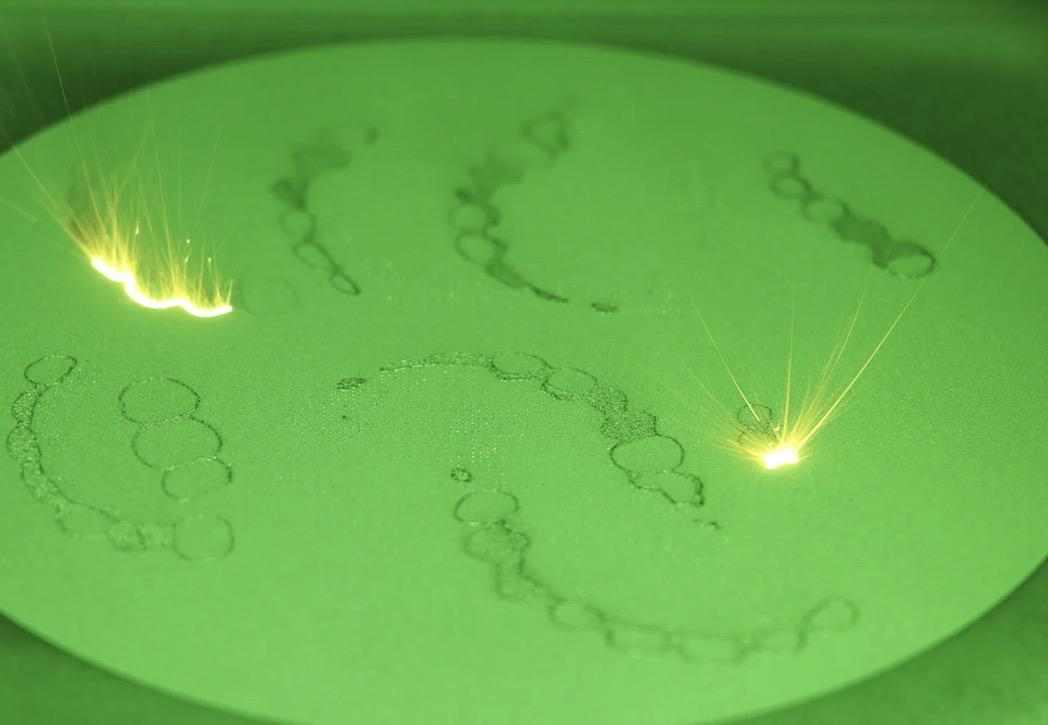
Modern additive manufacturing systems built for professional dental settings adopt reliable optical and thermal control mechanisms to sustain consistent structural quality. The M-150 features a single fiber laser and a melting area of $150 mm x 140 mm, including the build plate. With adjustable layer thicknesses from 20 um to 60 um, the M-150 supports metal printing with CoCr and titanium alloys.
The M-150 uses an automated gas and oxygen control system to help maintain a controlled atmosphere during metal printing. The protective gas used depends on the material and validated process parameters.
When technicians search for the best 3D metal printer for their specific production volume, they typically look for machines that combine high powder utilization with reliable atmosphere control. Efficient powder management systems reduce material waste during replenishment, helping laboratories control consumable expenses over time. Additionally, intuitive software interfaces allow operators to manage job queues and apply specialized distortion-compensation parameters with minimal manual intervention.
Ecosystem Integration and Local Support
Investing in additive manufacturing involves more than purchasing standalone hardware units. Long-term success depends heavily on how well the equipment integrates into an existing digital infrastructure. Facilities benefit from working with providers that offer a cohesive “equipment + platform + service” digital ecosystem.
This framework connects digital design software directly with production machinery, simplifying job tracking and parameter setting across different technician shifts. Comprehensive training and preventive maintenance guidance further empower lab teams to achieve maximum operational efficiency.
Beyond software and hardware, technical backing plays a decisive role in maintaining high productivity. Specialized dental technical support ensures that lab operators receive expert guidance when adjusting parameters for new clinical indications or unfamiliar alloy powders. Responsive after-sales service and global agent-backed local service networks provide essential peace of mind, minimizing potential operational interruptions. When equipment manufacturers maintain active involvement in industry standards development, laboratories can trust that their manufacturing processes remain aligned with current medical regulations and professional best practices.
Adopting in-house metal production empowers dental laboratories to take full charge of their manufacturing schedules, quality assurance, and client relationships. By combining reliable laser technology, structured software ecosystems, and dedicated technical support, facilities can elevate their operational capabilities and deliver consistent, high-quality restorations to clinicians and patients alike.
