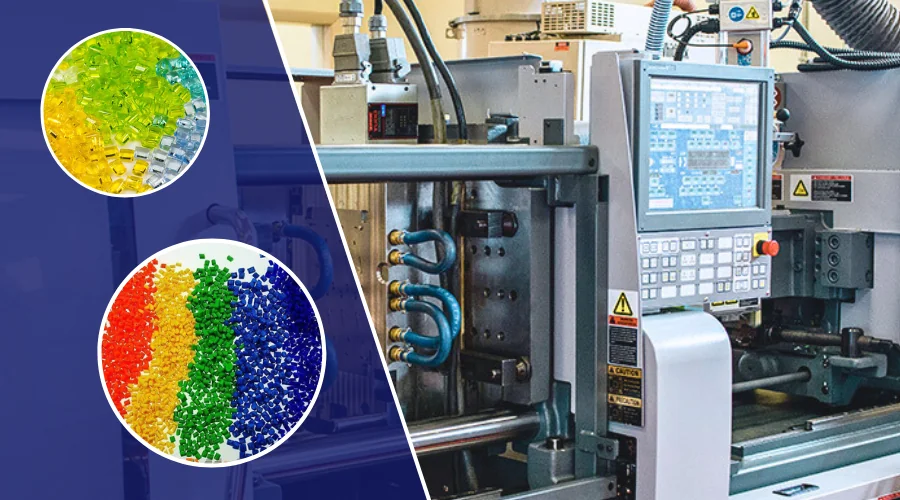
Material selection becomes difficult when two polymers can both produce a workable molded component. PBT and PP illustrate this problem well: PP is often selected when flexibility, durability, chemical resistance, and cost efficiency align with the part’s primary function, while PBT becomes the stronger candidate when heat resistance, electrical performance, and dimensional stability are critical. The better choice depends on which requirements are non-negotiable and what manufacturing compromises the project can tolerate.
Start With the Part, Not the Resin
A useful selection process begins by describing the component’s job in measurable terms. Engineers can identify whether the part must flex repeatedly, maintain a precise shape, support a load, insulate electrical elements, resist chemicals, or remain functional in a warm environment.
PP becomes attractive when compliance and repeated flexing are part of the design requirement. HordRT’s reference material describes PP as flexible and durable, with good fatigue and chemical resistance. Those characteristics can make it appropriate for components where stiffness is less important than controlled movement or toughness.
PBT moves the decision toward engineering performance. The reference identifies strong electrical properties, heat and chemical resistance, and dimensional stability as important characteristics. That profile can be more relevant for housings, automotive components, electrical parts, and industrial components where shape retention and functional stability matter.
Translate Service Conditions Into Material Demands
The phrase “operating environment” should be broken into individual stresses rather than treated as a single specification. Temperature, moisture, chemicals, mechanical loading, and repeated movement can affect a part in different ways.
A component exposed to chemical contact may favor PP because its chemical resistance is a central strength. A component requiring stable dimensions and dependable electrical performance may push the selection toward PBT. Neither conclusion should be made from a material name alone, because specific grades and formulations can change the behavior available to the designer.
Temperature deserves particular attention because mechanical requirements do not disappear when the surrounding temperature changes. A part that appears sufficiently rigid during room-temperature testing may face a different design requirement during actual service. Engineers should therefore evaluate the material under the conditions that correspond to the finished product rather than selecting a resin from room-temperature properties alone.
Moisture and chemical exposure should be considered alongside mechanical requirements. The correct question is not simply which polymer resists a particular substance, but whether the part can preserve its required function after the expected exposure.
Look at What Changes Inside the Mold
Material selection also changes the manufacturing conversation. PP is described by HordRT’s reference as having good flow characteristics and relatively easy processing. That can be useful for complex geometries and higher-volume molding programs. PBT, by comparison, is identified as more difficult to process than PP, although its performance can justify that additional manufacturing attention in suitable applications.
That difference should reach the design review before tooling begins. Gate locations, wall thickness, ribs, cooling, draft, and dimensional requirements all interact with the selected resin. Switching materials late in development can therefore create consequences beyond changing the material line on a drawing.
Shrinkage behavior and dimensional requirements deserve particular scrutiny. A component with tight interfaces may need more careful validation than a flexible cover with generous clearances. Material selection should consequently be reviewed together with tolerances and mold design instead of being handled as a separate purchasing decision.
Prototype Testing Should Settle Borderline Decisions
Some projects cannot be resolved reliably through a material comparison table. If both polymers appear technically viable, physical testing can reveal which one creates fewer compromises in the actual geometry.
A prototype program can examine fit, stiffness, snap performance, surface appearance, dimensional retention, and behavior under representative service conditions. Testing the intended geometry matters because ribs, bosses, thin walls, openings, and assembly interfaces can change how a polymer performs in the finished component.
For engineering teams comparing PBT vs PP, a more useful prototype question is therefore not “Which material has better properties?” It is “Which material produces the required part with acceptable manufacturing and performance margins?”
That distinction prevents a common development mistake: selecting a resin because its datasheet looks stronger, then discovering that the resulting component is unnecessarily expensive, difficult to mold, or poorly matched to its actual function.
Carry the Material Decision Into Production
Material selection should remain visible when the project moves from engineering into sourcing. Availability, grade consistency, processing requirements, inspection criteria, and tooling strategy can all influence whether the initial material decision remains practical at production scale.
HordRT states that its supply chain can source plastics from manufacturers or authorized agents and that its injection molding operation supports materials including PP and numerous other engineering plastics. The company also describes preliminary DFM analysis as part of its manufacturing support.
Such a review is particularly useful when the chosen polymer creates tighter process requirements. DFM feedback can expose potential issues in geometry or molding assumptions before production tooling is finalized. That makes material selection part of manufacturability planning rather than a decision made independently by the design team.
HordRT also provides injection molding alongside rapid tooling and other manufacturing capabilities, allowing a material decision to be considered within a broader prototype-to-production workflow. For projects where material performance and manufacturing feasibility are closely connected, that integration can simplify technical coordination.
Choose the Polymer That Reduces Downstream Compromise
PBT vs PP should ultimately be treated as an engineering tradeoff rather than a contest between two material families. PP can make sense when flexibility, chemical resistance, fatigue behavior, and cost efficiency align with the component’s requirements. PBT becomes more compelling when electrical performance, dimensional stability, heat resistance, and engineering-grade performance carry greater weight.
A more defensible selection is generally one that satisfies the actual service requirements while minimizing avoidable problems in geometry, molding, validation, or production. When the requirements sit close to the boundary between the two materials, representative prototype testing and an early DFM review can provide a more reliable basis for the final decision than a generic property ranking.
