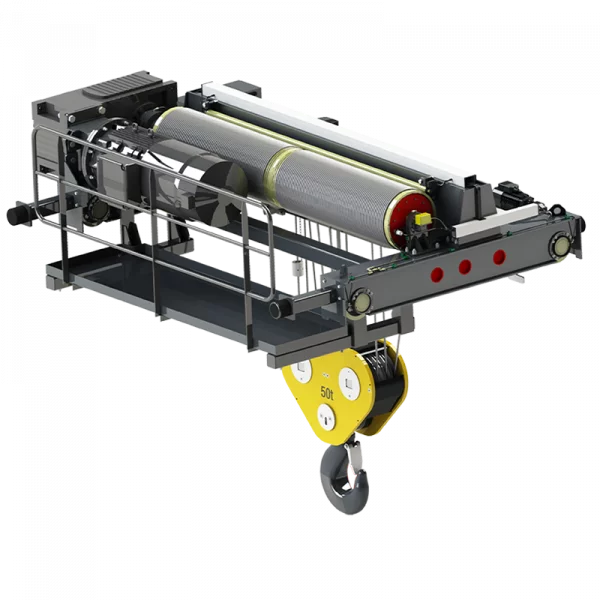
Metals warehouses face a demanding material handling environment. Steel coils, metal sheets, bars, and other heavy products must be moved efficiently while maintaining control, protecting materials, and reducing unnecessary handling time. When lifting processes depend on outdated equipment or poorly matched systems, bottlenecks can quickly affect warehouse productivity and workplace safety.
Choosing the right crane components creates a more reliable lifting workflow. From gearmotors and end carriages to lifting attachments and control systems, each component contributes to the overall performance of an overhead crane. For facilities handling heavy metal products, the right combination of equipment can make daily operations more predictable and easier to manage.
Why Metals Warehousing Requires Reliable Lifting Systems
Metals are often stored in dense layouts where available floor space needs to be used efficiently. At the same time, many products are heavy, difficult to position manually, and sensitive to impact or improper handling. A lifting system therefore needs to provide sufficient capacity while allowing operators to move loads with accuracy.
An overhead crane for metals warehouse applications can reduce dependence on forklifts and other floor based handling methods. By moving loads above the working area, overhead cranes can help keep storage and transportation routes more organized. However, crane performance depends on more than the main structure. Motors, wheels, end carriages, lifting attachments, controls, and safety systems all need to work together.
This makes component selection an important consideration when installing a new crane or upgrading an existing system.
Key Crane Components for Heavy Metal Handling
Different warehouse operations require different combinations of crane components. A gearmotor, for example, provides the drive needed for crane travel and positioning. Proper motor and gearbox selection can influence movement speed, load control, and the long term operating condition of the equipment.
End carriages are another important part of an overhead crane. They support crane movement along the runway and must be suitable for the required load, travel conditions, and operating frequency. Reliable movement is particularly important in metals warehouses where loads may be transferred repeatedly between storage, processing, and loading areas.
Crane kits and lifting attachments also deserve careful attention. The attachment should correspond to the shape, weight, dimensions, and handling characteristics of the material. For operations involving coils, a steel coil handling crane needs an appropriate lifting solution that can securely engage and position the load without creating unnecessary impact or instability.
WORLDHOISTS provides crane components across categories including crane kits and lifting attachments, gearmotors, and end carriages, alongside hoisting and lifting equipment and electrical and electronic systems.
Improving Steel Coil Handling and Warehouse Flow
Steel coils present specific handling challenges because of their concentrated weight and cylindrical shape. Poorly planned movement can create delays when coils need to be transferred between storage locations, production lines, or transportation areas.
A properly configured steel coil handling crane can support smoother material flow by providing controlled lifting and positioning. The objective is not simply to move a heavier load. It is to make repeated movements more consistent while reducing unnecessary repositioning and waiting time.
For warehouses with frequent coil movement, lifting attachments should be selected according to actual load characteristics rather than relying only on nominal lifting capacity. Crane travel speed, lifting speed, operator controls, and available workspace should also be considered together.
This approach can turn metal storage lifting equipment into part of a coordinated workflow rather than treating the crane as an isolated piece of machinery.
Safety Starts With the Complete Crane System
Safety cannot be determined by one component alone. A crane with sufficient rated capacity can still create operational risks if its drive system, lifting attachment, controls, or supporting components are not properly matched.
A safe crane for metals industry applications should therefore be considered as an integrated system. Load capacity, duty cycle, travel conditions, lifting frequency, working environment, and operator requirements all influence equipment selection.
Electrical and electronic systems can also contribute to more controlled crane operation. WORLDHOISTS lists crane hoist control systems, intelligent safety systems, and intelligent features within its product portfolio, providing options for facilities considering upgrades to existing lifting equipment.
Regular inspection and maintenance remain equally important. Components exposed to frequent loading and movement should be monitored for wear, unusual noise, reduced performance, or other signs of deterioration. Preventive maintenance can help identify problems before they develop into unexpected operational interruptions.
Choosing Crane Components for Long Term Performance
When evaluating crane components, purchasing teams and maintenance personnel should look beyond the initial equipment cost. Compatibility, operating conditions, maintenance requirements, replacement availability, and the intended duty cycle can all influence the total value of a lifting system.
It is also important to consider whether individual components can integrate effectively with an existing crane. A modernization project may not always require complete equipment replacement. Upgrading selected components can sometimes address specific performance limitations while retaining suitable parts of the existing system.
WORLDHOISTS offers product categories covering hoisting equipment, crane components, and electrical and electronic systems, allowing different elements of a lifting operation to be considered within a broader equipment strategy.
Building a More Predictable Metals Handling Workflow
Metals warehousing requires more than lifting capacity. Efficient handling depends on how reliably loads can be lifted, moved, positioned, and returned to storage or production areas. Selecting suitable crane components can help reduce operational bottlenecks while supporting safer and more consistent material movement.
For facilities handling steel coils and other heavy metal products, the right combination of gearmotors, end carriages, lifting attachments, controls, and safety systems can provide a practical foundation for improving daily operations. By evaluating the complete lifting workflow rather than focusing on individual equipment specifications, warehouse operators can make better decisions about both new installations and modernization projects.
WORLDHOISTS provides a range of hoisting, crane component, and control solutions designed for different lifting applications. Its product portfolio includes crane kits and lifting attachments, gearmotors, end carriages, and crane control and safety systems, giving customers options when developing or upgrading material handling systems.
