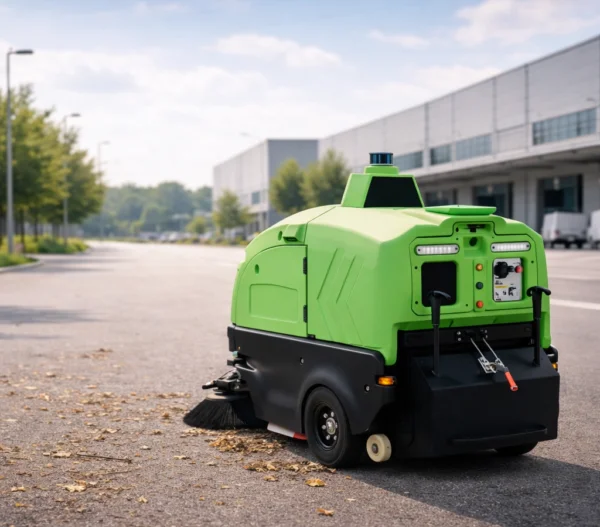
Heavy manufacturing plants, brickyards, and logistics centers face daily challenges in controlling heavy dust, abrasive particles, and dense soil accumulation. Fine aggregate dust and sharp raw material fragments continually settle across expansive concrete bays, where forklift traffic grinds them directly into the floor surface. Left unchecked, this abrasive layer degrades concrete seals, creates slipping hazards, and lowers indoor air quality. Integrating a specialized industrial cleaning machine into regular facility workflows enables site managers to establish systematic, repeatable floor care routines. Greendorph’s industrial cleaning equipment is designed for suitable heavy-duty cleaning applications in manufacturing and industrial environments.
Procuring heavy-duty sanitation hardware requires a comprehensive evaluation of structural engineering, dust suppression technology, and operational duty cycles. A basic commercial unit often lacks the structural durability and suction power needed to handle heavy debris loads or rough concrete substrates. Deploying a dedicated floor cleaning machine for industrial use removes human variance from daily maintenance loops, protecting valuable facility infrastructure and keeping high-traffic production bays clear. Evaluating these core mechanical parameters helps procurement teams select hardware that delivers lasting operational value.
Structural Durability and Chassis Engineering for Heavy-Duty Sites
Demanding industrial facilities subject cleaning machinery to intense mechanical stress, frequent vibration, and occasional impacts with storage racks or structural pillars. Light-duty chassis designs flex under these conditions, causing brush misalignments and early component failure. Heavy-duty utility platforms utilize reinforced steel frames and impact-resistant housings to withstand harsh operational conditions without structural distortion.
Operating an advanced industrial cleaning machine in rugged environments prevents frequent workshop repairs and maintains reliable daily performance. Robust structural design protects internal drive components and control electronics from fine dust infiltration and physical shocks. This engineering durability allows site crews to complete heavy cleanup tasks across raw manufacturing zones shift after shift.
Mechanical Sweep Dynamics and Particulate Extraction Physics
Effective removal of dense soils—such as brick dust, metal shavings, and outdoor gravel—requires a calculated balance of brush downpressure and negative-pressure airflow. Standard brooms often push heavy particles forward while scattering fine silica dust into the surrounding air. Greendorph’s YJ130 combines its primary cleaning system with suction, airflow-assist, and misting functions to support debris collection and dust control in industrial environments.
Deploying a specialized floor cleaning machine for industrial use ensures that coarse debris is extracted cleanly in a single pass without scratching floor sealants. Greendorph’s dust-control approach combines water misting and collection functions to help manage airborne particulate during cleaning. This controlled mechanical extraction protects workers from inhaling fine particulate matter during long operational runs.
Automated Systems and Operational Case Evidence
Industrial Park Cleaning — Autonomous Solutions for Heavy-Duty Environments highlights how automated utility platforms resolve persistent labor bottlenecks in heavy production facilities. Real-world applications, such as The Austral Bricks Case Study, demonstrate how autonomous floor care hardware handles heavy particulate loads without constant human intervention. Automated navigation systems follow pre-mapped routes, delivering consistent sweeping coverage across expansive production plants.
Greendorph industrial floor sweepers deliver consistent, precise, and fully automated floor maintenance for any facility. The compact yet powerful design makes it one of the most versatile floor cleaning machines industrial, ensuring daily maintenance faster and more reliable. This automated capability allows plant directors to schedule deep cleaning cycles during low-activity periods, keeping facilities pristine without interrupting active manufacturing schedules.
Water-Spray Suppression and Dust Hazard Control
Dry sweeping across dry concrete decks often kicks up dense dust clouds, exposing personnel to respiratory discomfort and violating workplace safety standards. Integrated dust containment networks utilize fine water misters to bind small particles together right before vacuum extraction takes place. This liquid-suppression mechanism weighs down fine silica dust, directing it straight into the internal hopper without escaping into surrounding work bays.
Utilizing an industrial cleaning machine equipped with water-spray misting keeps ambient facility air fresh and safe for floor personnel. The dust-control system can help limit airborne particulate during cleaning, which is particularly relevant in industrial areas where dust management is a key concern. These sealed air channels enable facility managers to maintain high environmental compliance standards across heavy industrial sites.
Drivetrain Efficiency and Maintenance Overhead Control
Traditional internal combustion utility vehicles contain complex hydraulic lines, drive belts, and fluid reservoirs that demand frequent, specialized maintenance. Dusty operating conditions accelerate wear on these internal components, leading to sudden hydraulic leaks and costly operational downtime. Electric power systems can simplify equipment operation, while buyers should evaluate drivetrain design and maintenance requirements before procurement.
Adopting an electric floor cleaning machine for industrial use lowers weekly maintenance checklists while protecting annual facility repair budgets from unexpected expenses. Electric drive systems can support consistent machine operation, while buyers should consider motor design, maintenance requirements, and expected service conditions. Simplifying mechanical drive components keeps utility vehicles active on the floor, delivering steady cleaning performance day after day.
Conclusion
Preserving concrete floors across heavy manufacturing plants and industrial parks demands replacing manual sweeping routines with robust electric utility hardware. Deploying a heavy-duty industrial cleaning machine enables site directors to protect floor sealants, control airborne dust, and eliminate heavy debris safely. These durable, battery-powered platforms deliver consistent performance across high-traffic production bays while lowering annual repair expenses substantially. Incorporating Greendorph utility hardware into ground care programs provides facility managers with reliable, sustainable tools engineered to keep industrial environments pristine.
