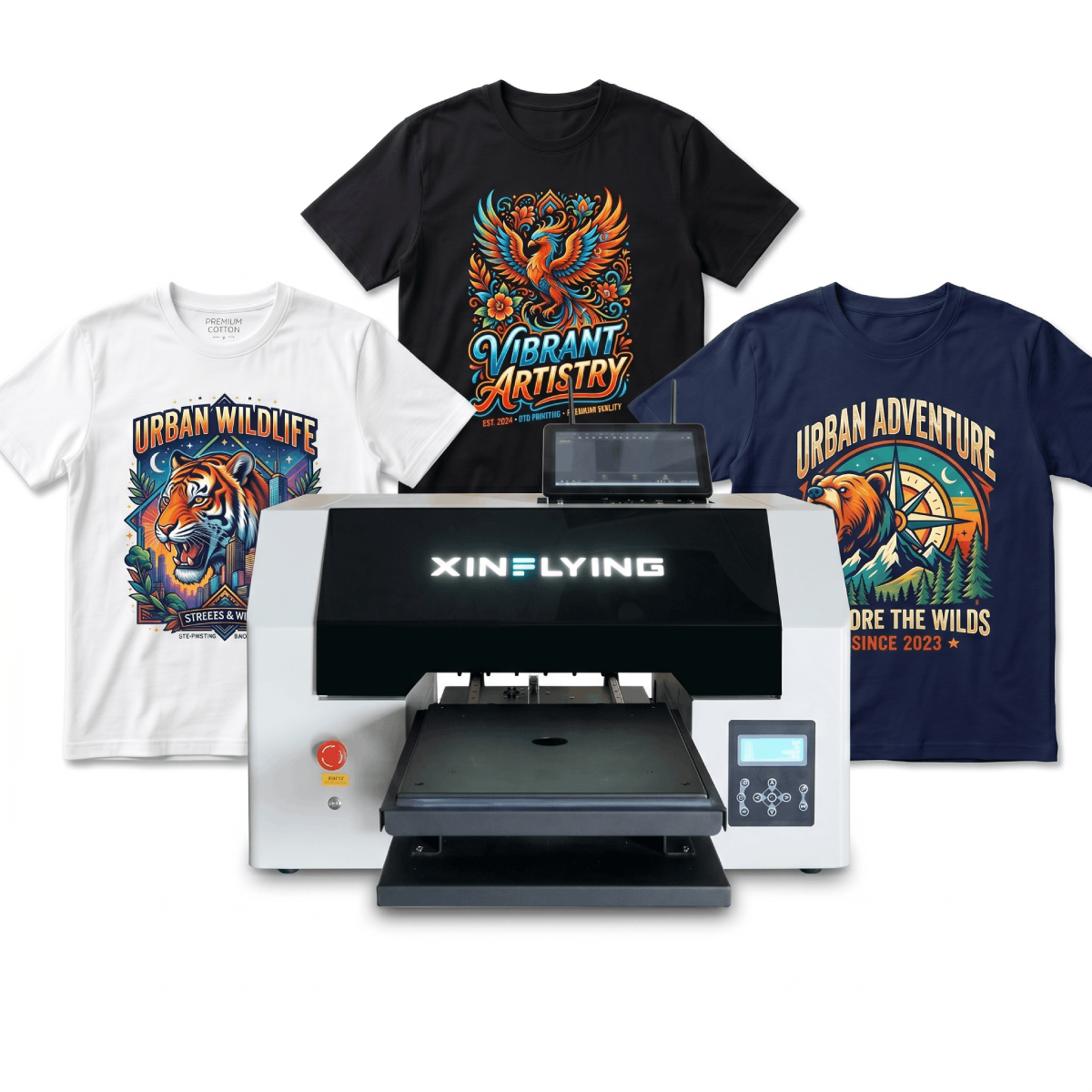
On-demand apparel production is reshaping how garment businesses manage customization, inventory, and order fulfillment. Customers increasingly expect personalized designs without large minimum quantities, while print businesses need to respond quickly without sacrificing image quality. These demands are pushing digital direct-to-garment technology into a more important role. A modern DTG printing machine can connect digital artwork directly with garment production, helping businesses handle short runs, customized orders, and changing product demand more efficiently.
Why On-Demand Production Is Changing Garment Manufacturing
Traditional garment decoration methods can be highly effective for large, repeat orders, but setup requirements can become less practical when designs change frequently. Screen preparation, color separation, and other pre-production steps may add time and cost to smaller jobs.
DTG printing takes a different approach. Designs are sent digitally to the printer and applied directly to garments, reducing the need for traditional printing screens. Xinflying identifies DTG as particularly suitable for custom T-shirts, print-on-demand businesses, fashion apparel, and personalized cotton products.
This digital workflow makes it easier for commercial print providers to accept smaller orders while maintaining a professional production process. It can also support businesses that need to produce many different designs rather than large quantities of a single design.
How High-Speed DTG Printing Supports Market Responsiveness
Speed matters when customers expect customized products within short delivery windows. A production system that reduces printing time can help businesses process more orders during available working hours and respond more effectively to demand fluctuations.
However, productivity should not be judged by printing speed alone. Garment loading, pretreatment, printing, curing, maintenance, and operator intervention all affect actual throughput. A well-designed DTG printing machine therefore needs to support the complete workflow rather than simply maximize carriage movement.
Xinflying’s DTG product range is designed around different production requirements. Its portfolio includes compact equipment for custom apparel businesses as well as larger systems for higher-volume production. The company states that its DTG printers are intended for garment decoration and on-demand apparel operations.
XF-RA3T-2XP: Combining Pretreatment and Printing
For businesses seeking a compact entry into automated garment production, the Xinflying XF-RA3T-2XP DTG Printer Self-Service T-Shirt Printing Machine combines automatic pretreatment and high-resolution printing in one system. This configuration is designed to reduce separate handling stages and help improve production consistency.
The model has an A3 printing format and uses two Epson XP600 printheads. Its listed productivity is 12-pass A4-size printing in 180 seconds, while the machine dimensions are 805 × 765 × 480/520 mm. These specifications position the machine for businesses that need a relatively compact solution for customized T-shirt and small-scale apparel production.
The integrated pretreatment function is particularly relevant to workflow efficiency. Pretreatment is an important part of DTG production, particularly when printing white ink on dark garments, because it helps support ink adhesion and color performance. After printing, the garment still needs an appropriate curing process using a heat press or dryer.
Print Quality Remains Critical at Higher Speeds
Increasing output does not create value if print quality becomes inconsistent. Commercial apparel buyers expect sharp graphics, accurate colors, and repeatable results across orders. This is especially important for brands using DTG to reproduce detailed artwork, photographs, logos, and multicolor designs.
The XP600 printhead configuration of the XF-RA3T-2XP is intended to support high-resolution garment printing while maintaining a compact machine design. For businesses producing personalized apparel, this combination can be useful when production flexibility is more important than extremely large-format output.
Fabric selection also influences final results. Xinflying states that DTG technology works particularly well on cotton garments, while its product information also lists compatible blended fabrics and highlights 100% cotton T-shirts as a common application.
Building a More Efficient Production Workflow
Industrial on-demand printing requires more than a fast printer. The surrounding workflow should minimize unnecessary manual steps and keep production predictable. Automatic pretreatment can help reduce handling, while appropriate platen selection, garment positioning, ink management, and curing procedures contribute to consistency.
Xinflying’s broader DTG range also incorporates features such as white-ink circulation, automatic lifting systems, and removable printing platforms. Its DTG-10, for example, uses infrared sensing for automatic platform-height adjustment and offers multiple removable platforms for different garment sizes.
For larger operations, Xinflying also offers the XF-DTG-20 double-station model with four Epson i3200-A1 printheads. Its two-station configuration allows operators to alternate garment loading and printing, demonstrating how equipment architecture can change as production requirements increase.
What Business Buyers Should Evaluate Before Upgrading
A commercial buyer should assess equipment based on actual order patterns rather than headline speed alone. Expected daily volume, garment types, average design size, color requirements, available floor space, and operator skills all influence the appropriate machine configuration.
The production environment should also account for pretreatment and curing. DTG printing is not simply a matter of placing a T-shirt into a printer. A complete workflow includes artwork preparation, pretreatment where required, garment positioning, direct printing, and curing. Xinflying’s published DTG workflow follows these stages.
Supplier capability is another important consideration. Businesses evaluating an Xinflying DTG printer manufacturer should examine technical support, consumable compatibility, maintenance guidance, training, and long-term service alongside the printer’s specifications. These factors can have a direct effect on production continuity after installation.
Why DTG Technology Is Becoming Central to On-Demand Apparel
The growth of personalized apparel is making flexibility an increasingly important production advantage. Businesses need to move from digital artwork to finished garments with fewer barriers between individual orders, while still maintaining consistent quality and commercially viable production times.
A modern DTG printing machine can support this model by combining direct digital printing, detailed color output, and short-run flexibility. The Xinflying XF-RA3T-2XP takes this approach further by integrating automatic pretreatment with printing in a compact A3-format system.
For companies evaluating DTG equipment, the most useful question is not simply how fast a printer can operate. The stronger consideration is how effectively the machine fits the entire on-demand workflow. As apparel markets continue moving toward personalization and smaller production runs, efficient digital garment printing can give commercial print businesses a practical foundation for responding to that shift.
