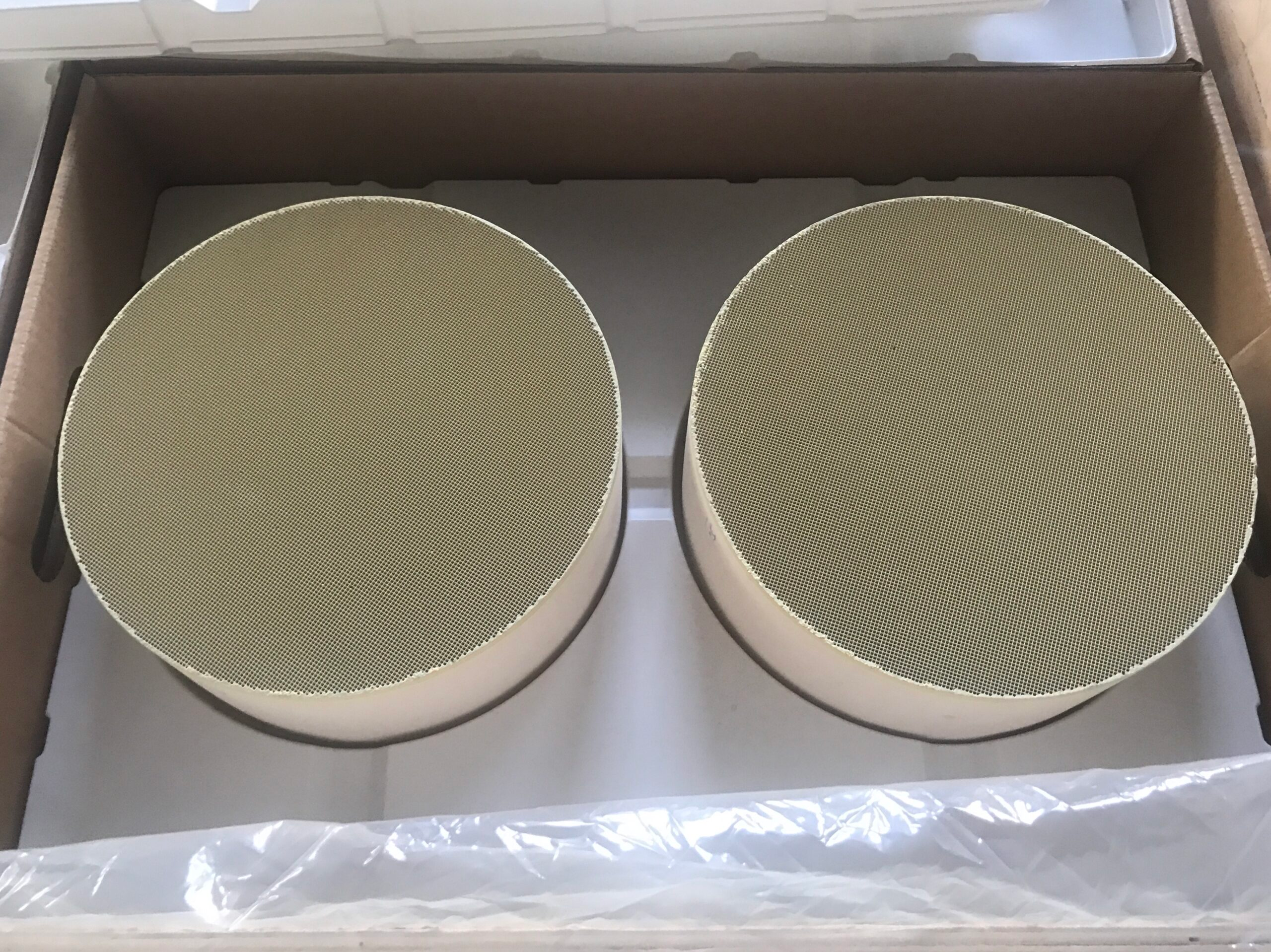
The same catalyst can show different NOx conversion on the same engine as load and speed change. Exhaust temperature and the relative amounts of NO and NO₂ move during operation; the reaction environment does not remain at the convenient point used for a laboratory demonstration. Understanding those changes is central to nox reduction with vanadium pentoxide formulations.
An operating map connects the chemistry to real duty. It records how often the exhaust enters a useful temperature interval, how much NOx is present there, and what reductant supply reaches the catalyst. Physical flow through the substrate also has to remain stable. A good result at one condition cannot stand in for coverage of the full map.
Track the NO and NO₂ Balance
Diesel exhaust contains nitrogen oxides in changing proportions. In standard SCR, ammonia reduces NO over the catalyst; a suitable mixture of NO and NO₂ permits a faster pathway. The shift between those routes explains why two exhaust streams with the same total NOx concentration may respond differently. Total concentration and component ratio are separate inputs.
Urea injection adds another moving condition. Dosing has to provide enough ammonia for the incoming NOx without leaving an excessive amount downstream. Changes in load alter exhaust flow and NOx production, while transport time separates the injection event from the reaction surface. The control system and catalyst therefore need to be evaluated as an operating pair.
The inlet composition may also depend on upstream equipment. An oxidation stage can alter the NO₂ fraction, while piping and mixer placement affect the condition delivered to the catalyst. A nox reduction result reported without the inlet measurement location can hide this influence. Data from the installed SCR inlet are more useful than an engine-out value alone.
Read Temperature as a Distribution
Below an active window, reaction rates may be too low for the required conversion even if sufficient catalyst volume is installed. Higher temperature can change activity and durability concerns. Hualian Catalyst lists approximately 230–470°C as the temperature window for vanadium-based metal oxide SCR formulations. Matching the engine’s operating temperatures to that range provides a useful starting point for evaluating catalyst suitability.
The interval does not imply a flat performance curve. Conversion can vary within it with temperature, flow, NO/NO₂ proportion, and ammonia availability. An assessment that reports only the maximum conversion achieved at one point leaves the low-load or transient problem unanswered. A temperature histogram paired with NOx mass can expose where the greatest unmet duty remains.
Standard-SCR and fast-SCR pathways differ in their response to the NO/NO₂ mixture. This distinction appears in Hualian’s diesel information alongside exhaust temperature as a factor in reaction efficiency. At each load point, mixture and dose determine which route is available for testing. Conversion can be interpreted against the chemistry present at that point.
Vanadium pentoxide is also used as a name in other catalyst product families. Hualian describes a V₂O₅ family as maintaining catalytic activity at elevated temperatures, but that broad statement does not transfer a particular industrial product’s performance to diesel SCR. The reaction, support, operating medium, and test configuration must be identified before two temperature claims are compared.
Thermal history changes what the catalyst sees as well as how it performs. A component that repeatedly warms and cools may behave differently from a fresh specimen held at one steady temperature. Where an engine cycles between cold operation and heavy work, tests need to represent that sequence. Aged and conditioned measurements can reveal whether the usable window remains sufficient.
Include the Physical Flow Path
Gas must reach active sites while the exhaust line stays within its pressure allowance. Hualian’s SCR substrate description pairs low pressure drop with good heat-shock resistance and also cites high surface area and low thermal expansion. These properties concern the stability of the reaction path; they do not replace measurements of chemical conversion under the specified inlet conditions.
Flow distribution can make a nominally adequate catalyst unevenly loaded. A concentrated jet raises local velocity and may shorten contact time in one region while other channels see less gas. Mixer geometry, inlet cone design, and substrate position therefore enter the operating-condition study.
Pressure readings alone cannot show whether every part of the face receives comparable flow. An inlet sensor’s position matters: the recorded temperature should represent gas reaching the catalyst face, not a distant point upstream of the mixer.
Transient tests bring the variables together. During a load step, temperature, NOx rate, NO/NO₂ ratio, exhaust flow, and reductant dosing can move at different speeds. Recording them at the same time reveals whether a conversion loss came from chemistry outside its window, insufficient ammonia, or uneven delivery. A single averaged efficiency value obscures that diagnosis.
The useful measure of a vanadium pentoxide SCR design is coverage of the actual duty cycle. Engineers need conversion and ammonia observations at the inlet conditions that carry meaningful NOx mass, with pressure and thermal behavior recorded for the same component. A shortfall tied to temperature, NO/NO₂ balance, or reductant delivery identifies the condition an installed SCR configuration must resolve.
