Urbanization continues to reshape residential architecture across major global markets. As city populations grow, average apartment sizes frequently decrease, forcing consumers to reevaluate their household organization. This demographic shift presents a distinct challenge for retail buyers who must rethink their inventory. Sourcing standard, bulky closets is less effective at capturing the modern urban demographic.
Retailers must adapt their catalogs to include highly efficient, footprint-conscious furniture. Freestanding garment storage has evolved from a niche category into an everyday necessity for many renters and urban professionals. Businesses that carefully evaluate clothing rack designs can better align their offerings with current spatial constraints. This precise alignment may support stronger sales performance in competitive urban retail sectors.
Maximizing Vertical Space Utilization
The primary design objective for compact furniture is maximizing vertical storage without occupying excessive floor area. Retailers should prioritize sourcing tall garment racks equipped with tiered hanging rods. These structures allow users to organize garments simultaneously on different levels.
By capitalizing on unused vertical space, these units deliver high utility within a minimal footprint. For purchasing managers, evaluating the height-to-width ratio of a product is essential. Racks designed with a narrow base but substantial height are often more appealing to consumers living in studio apartments or shared dormitories.
Beyond simple rod placement, the base structure of a garment rack dictates its stability in tight quarters. Designs featuring low-profile, reinforced bases allow users to slide the unit closer to walls or behind bedroom doors. Retailers should analyze these subtle structural elements during procurement to ensure the products genuinely maximize space efficiency.
The Value of Modular and Adjustable Features
Flexibility remains a critical purchasing factor for modern apartment dwellers. Furniture that cannot adapt to changing needs often faces higher return rates. Retailers can mitigate this by stocking garment racks featuring adjustable heights and expandable horizontal rods. This adaptability allows end-users to customize the unit to fit specific room dimensions.
Modular designs offer significant logistical advantages for procurement. Products that disassemble into compact components reduce packaging dimensions. This flat-pack approach allows buyers to maximize shipping container space, which may lower transportation costs. Efficient packaging directly supports a retailer’s ability to maintain competitive pricing.
Integrating Multi-Functional Capabilities
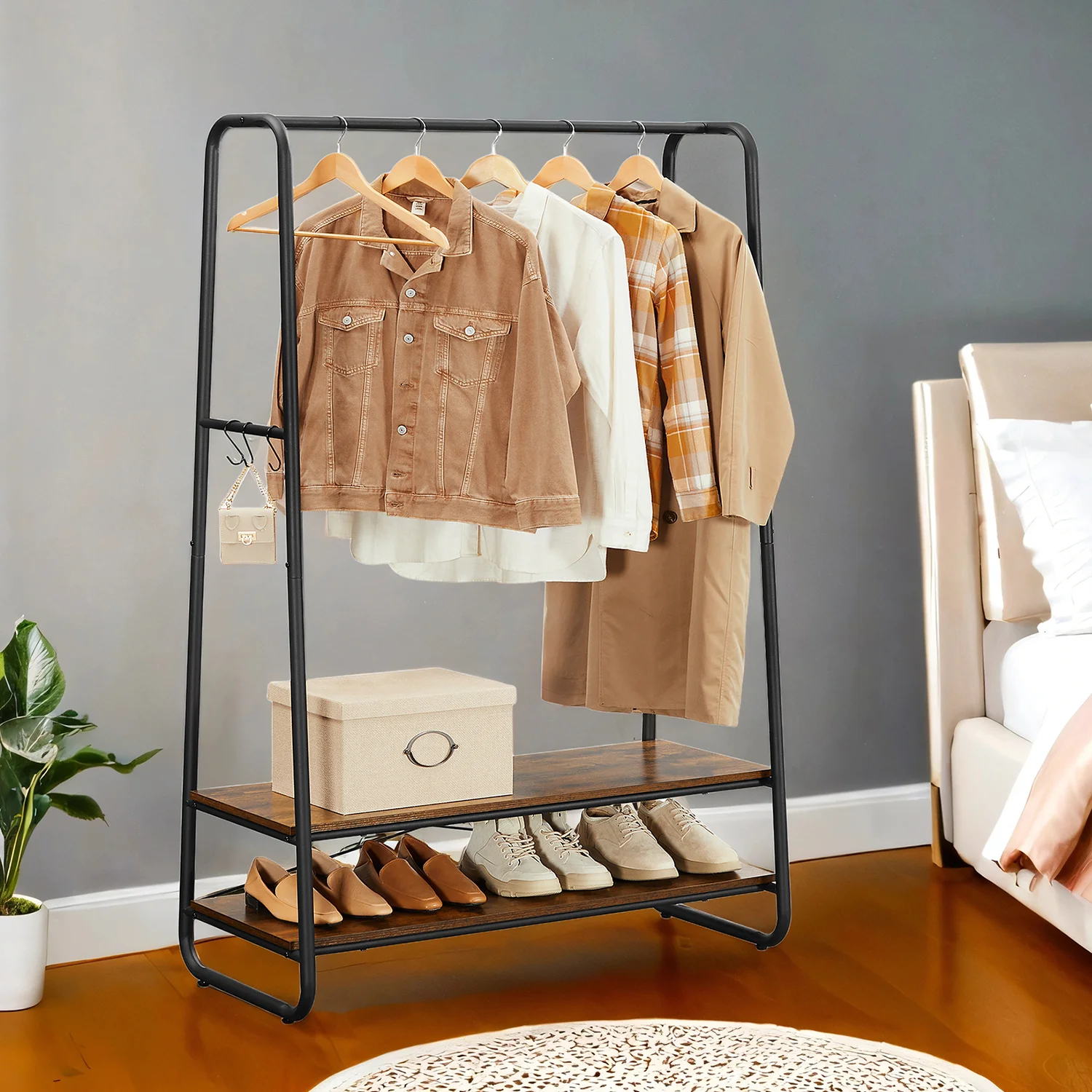
Consumers dealing with limited square footage often prefer furniture that serves multiple purposes. Sourcing single-function items might not effectively address the needs of an urban customer base. Clothing racks that incorporate bottom shelving, side hooks, or integrated shoe organizers present a higher perceived value.
These hybrid designs allow users to consolidate their wardrobe, footwear, and accessories into a single designated zone. From a retail merchandising perspective, multi-functional racks provide natural cross-selling opportunities. Displaying these units alongside compatible storage bins or hanging organizers can encourage shoppers to increase their overall transaction size.
Furthermore, selecting multi-purpose structures can significantly improve a retailer’s inventory metrics. Instead of stocking separate shoe racks, hat stands, and clothing rails, buyers can invest in all-in-one wardrobe solutions. This consolidation reduces the number of distinct SKUs a business needs to manage, streamlining warehouse operations and simplifying the purchasing process.
Expanding Catalogs with Enclosed Options
While open metal racks offer accessibility, many consumers require options that protect garments from dust and fading. Expanding a product line to include lightweight, enclosed alternatives helps retailers address varied consumer preferences. For example, stocking canvas wardrobes for small spaces allows businesses to serve customers seeking a more finished visual aesthetic.
Fabric-covered units provide the structural benefits of a freestanding rack combined with the privacy of a traditional closet. They are particularly suitable for open-plan lofts where exposed clothing might create visual clutter. By offering both open and closed temporary storage, retail buyers can build a comprehensive and inclusive category.
Evaluating Production Quality and Scale
Curating a resilient storage category requires collaboration with a reliable clothing rack manufacturer. The structural integrity of these products directly influences brand reputation. Procurement teams must verify that a factory utilizes durable materials, such as heavy-duty carbon steel and reinforced joint connectors, to prevent unit collapse under heavy garment loads.
Production scale is equally important when planning seasonal inventory. Manufacturers with extensive production lines can generally handle sudden surges in demand. This production flexibility can help wholesale buyers prevent out-of-stock situations during peak moving seasons, such as late summer or early autumn. Consistent availability is fundamental to maintaining retail momentum.
Assessing Comprehensive B2B Capabilities
When mapping out global supply chains, businesses may review the infrastructure of established industry participants. SONGMICS HOME operates as a comprehensive B2B furniture manufacturer, maintaining a portfolio of over 5,000 SKUs. Their offerings include various space-saving garment racks, modular shelving, and enclosed fabric closets tailored to different retail environments.
To support international wholesale operations, they utilize an extensive network of self-owned logistics facilities across multiple regions. This warehouse framework is designed to facilitate timely distribution and support efficient order fulfillment. Retailers might find this logistical capability advantageous when attempting to streamline their inbound freight and stabilize inventory levels.
They also offer Original Equipment Manufacturer services to support tailored product development. Their internal engineering teams can collaborate with retail buyers to adjust product dimensions, surface finishes, or material specifications. This flexibility allows businesses to create customized storage lines that align closely with their specific target demographics and market positioning.
Customer Lifecycle and Category Growth
Addressing the storage constraints of urban shoppers provides retailers with an opportunity to build long-term brand loyalty. When a business successfully solves a critical pain point for a first-time renter, that customer may return for future furniture needs. Strategic procurement in this category serves as an effective entry point for acquiring a younger demographic.
By maintaining a diverse catalog, merchandising teams can continually engage consumers as their living situations evolve. Moving from temporary single-bar racks to modular systems mirrors a customer’s progression into larger homes. Partnering with versatile manufacturing networks enables retailers to support this consumer journey, fostering sustainable commercial growth.
